Statistical Research Method
Is Singapore a Good place to live in?


💯 Distinction
✍️ Project Task
As a group of innovative, creative and energetic young people (The “ICE” Team) who intend to use data-driven analyses to investigate social issues / support better living in the community. As a team, we had to pick a social topic or a current issue, conjecture a main hypothesis and a set of sub-hypotheses, which will be verified or disproven by the analysis. We have to verify or disprove 1 sub-hypothesis each, which will contribute to verify or disprove the team’s main hypothesis.
📝 Topic chosen
Is Singapore a good country to live in ?
❓ Why this Topic?
After extensive discussions, we have decided to change our research topic from "Home-Based Learning is a Better Mode of Education than Physical Classrooms" to "Is Singapore a Good Place to Live?" Our initial topic lacked adequate online resources, so we decided to pivot our focus to the quality of life in Singapore, as we realized that we all had both positive and negative perspectives on the matter.
Data Analyst
20/06/2022 - 31/07/2022
🙎♂️Yong Xiang :Education
👨Jonathan: Saftey
👱Dylan: Mental Health
👩 Amber: Healthcare
👧🏻Javerine: Cost of Living
🤔 Deciding of sub-topics:
- Topics were chosen based on individual member's passions
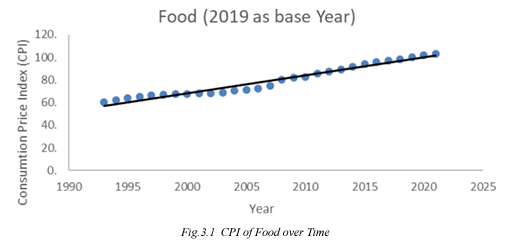
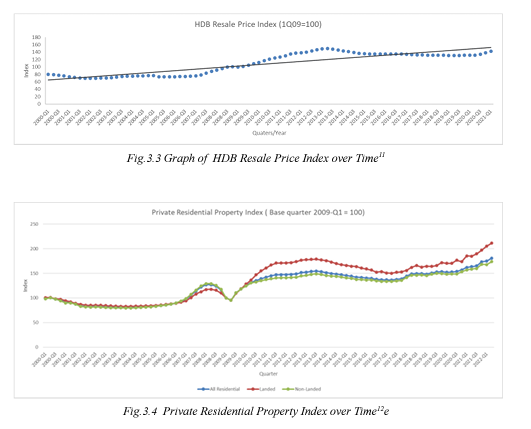
- For me, I felt strongly about the increasing cost of living in Singapore
- Thus, the topic "The Cost of Living in Singapore is Getting More Expensive" was chosen
😊 Our goal
- Brainstorm and consult with lecturers(stakeholders) on the feasibility of the project
- Choose a relevant topic
- Enhance knowledge on Statistical Research Methods and Media Literacy
- Research, draw conclusions, and provide recommendations.
📝 Survery
- The aim of the survey was to gather a large, unbiased dataset
- The survey was sent to friends, family and public chatrooms to achieve a diverse range of responses
- The final dataset consisted of 120 valid responses from ages 13 to 60
- Invalid responses, such as those created by jokers, were filtered out.
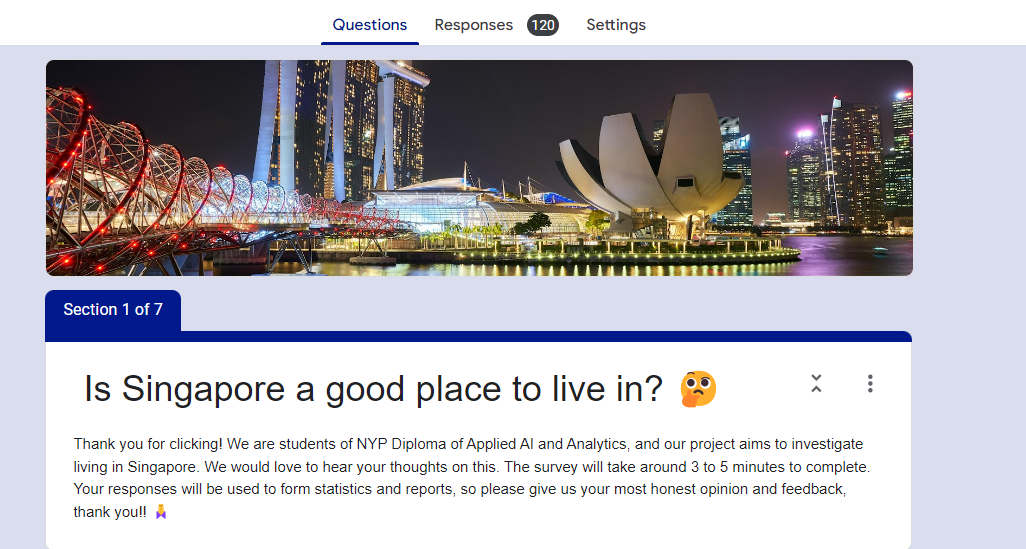

Due to privicy issues of our respondents, we will not be allowing access to the form responses.
📝My hypothesis conlusion:
In conclusion, the results of our statistical analysis suggest that the inflation rate in Singapore is increasing, but it does not support the hypothesis that "The Cost of Living in Singapore is Getting More Expensive". Our limited time and resources may have contributed to these results, as we only focused on comparing inflation in Singapore to other countries. To fully support the hypothesis, more research and analysis needs to be conducted, looking at other factors such as GDP, consumer price index, and income group gaps.
📝Groups conclusion:
In conclusion, Singapore is considered one of the best places to live in the world, but our statistical findings do not fully support this claim. While Singapore is known for its safety and good education and healthcare systems, there is limited evidence to support these claims. Our findings also show that there are fewer tertiary education holders in Singapore than the global average. The claim that "Singapore is a good country to live in" is subjective and depends on personal standards, but our analysis was based on factors such as education, healthcare, safety, low cost, and stress-free living. However, more statistical testing and data collection is needed to reach a true conclusion.
📝Recommendations:
Our recommendation is that residents and foreigners should make informed decisions on whether or not to reside in Singapore based on their personal standards, rather than relying solely on online findings. Before using online data, they should understand its relevance and credibility by evaluating its data collection method, sample size, and standard used. This is because every finding online is subjective and based on its own data and standards. People should make the most out of the information available to them and consider their own individual needs and preferences when making important decisions.
(you can read more about my findings here: click me)
-
The biggest challenge was time management
- The project timeline was tight, especially with it overlapping the break period where most team members had other commitments
- The 2-week break period could have been better utilized to conduct the survey and starting our project early
- The team ended up working for long hours in the final 4 days before the submission deadline
- Most members slept only 1-2 hours during this period as they focused on completing the report.
- This definetly could have been better avoided with better time planning
-
Other challenges faced were insufficient datasets and conflicting results from different datasets
- As I, being new to Statistical Research Methods, sought guidance from the lecturer and utilized online resources to improve their understanding of t-test and shared this knowledge with the team
We would like to extend our gratitude to our lecturers,Mr Heng Rui Jie and Mr Edwin Tan for their continuous support and constructive criticism provided throughout the course of our research.We would also like to thank Nanyang Polytechnic School of Information Technology for their invaluable guiding resources.